





Analysis

Not one more dollar for a war Congress hasn’t approved

Before Congress writes an $87 billion check, it deserves an $87 billion explanation


The White House has formally requested $87.6 billion in emergency supplemental funding, roughly $67 billion of it to replenish the Pentagon after the war against Iran. This is no longer a debate over whether there is a war; it’s a debate over whether Congress will follow the Constitution to authorize and finance the war – and under what conditions. The Constitution grants Congress the power to declare war, and the power of the purse. They have already failed to exercise their authority on the first – now’s their chance to act on the second. Congress should not write that check without a full accounting of what it buys. Every figure in this request should be measured against what it costs American families at the kitchen table — not what it costs in the abstract language of a Pentagon budget line.

Where This Fight Stands

  • The war has already cost more than $37.5 billion, killed 14 Americans and wounded 200+, and killed more than 3,600 Iranians — roughly half of them civilians.
  • Congress missed its 60-day deadline under the 1973 War Powers Resolution to authorize the war, letting it continue unchecked and freely handing over their power. On June 3, the House passed a Concurrent Iran War Powers Resolution, 215–208; the Senate followed with a bipartisan 50–48 vote on June 23, joined by Republican Sens. Bill Cassidy, Lisa Murkowski, Rand Paul, and Susan Collins. While it was long overdue, it was mostly symbolic.
  • The next fight is money: Trump has requested $67 billion for Iran (Operation Epic Fury) inside his $87.6 billion supplemental, on top of his existing requests for a $350 billion reconciliation package and a $1.1 trillion base budget for the Department of War.

What it costs YOU: spread across the ~129 million households in the U.S., the $87.6 billion ask works out to about $678 per household — or about $518 per household for the $67 billion Iran portion alone.

The unconstitutional war in Iran has been expensive – already costing somewhere between $37.5 billion (according to the Pentagon) and $113 billion (according to the Cato Institute). This works out to about $291-$876 per household.

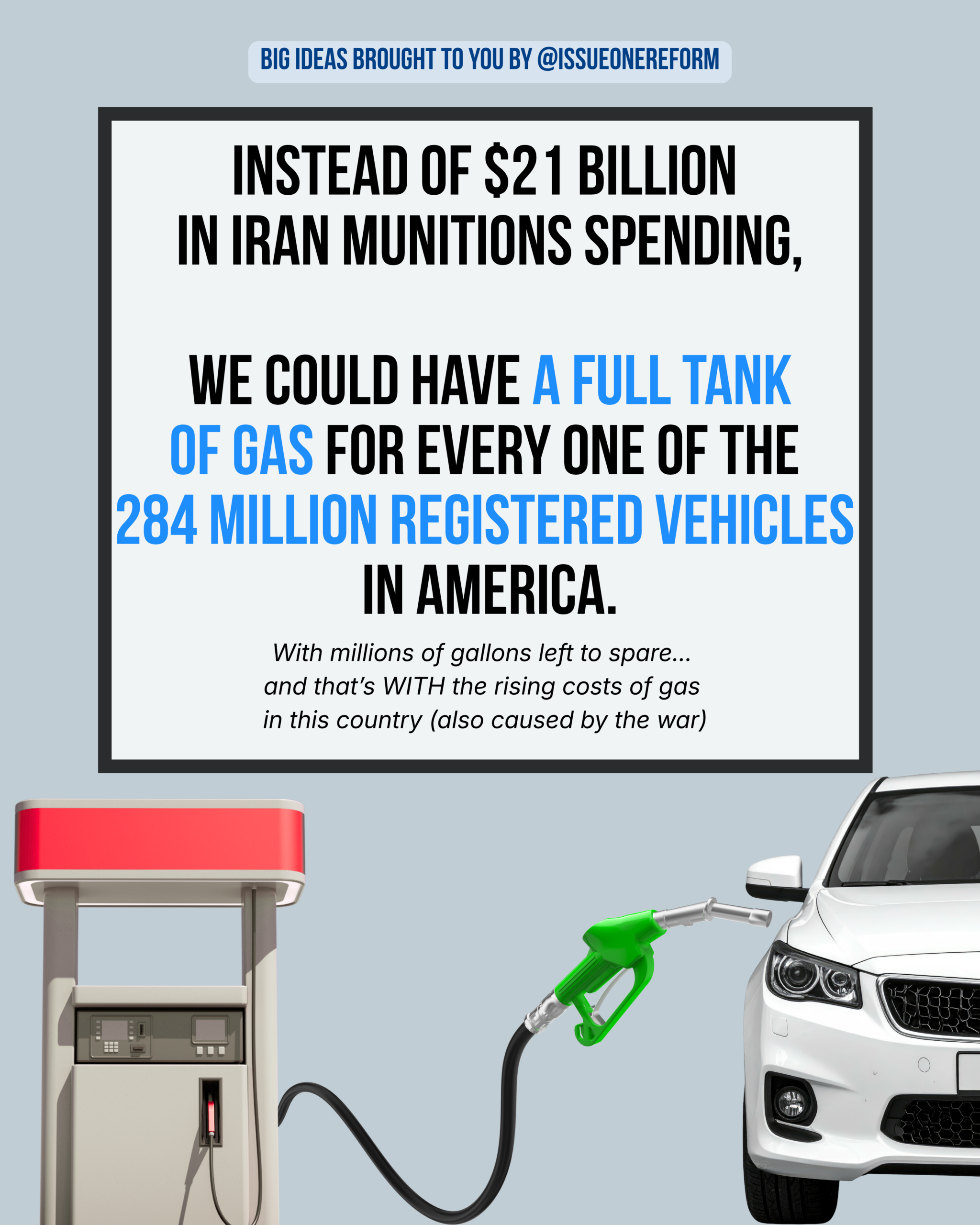
Instead of $21 billion in requested munitions spending, we could have:

  • free lunch, every school day of the year, for 4 out of every 5 public-school kids in the country average school lunch ($2.99) × 180 school days ≈ $538/student/year; $21B ÷ $538 ≈ 39 million lunches a day, ~79% of the nation’s 49.6 million public-school students (NCES).

  • a full tank of gas for every one of the 284 million registered vehicles in America, with millions of gallons to spare.$21B ÷ $3.88/gallon ≈ 5.4 billion gallons ÷ 284.6 million registered vehicles (FHWA) ≈ 19 gallons — about a full tank — per vehicle.

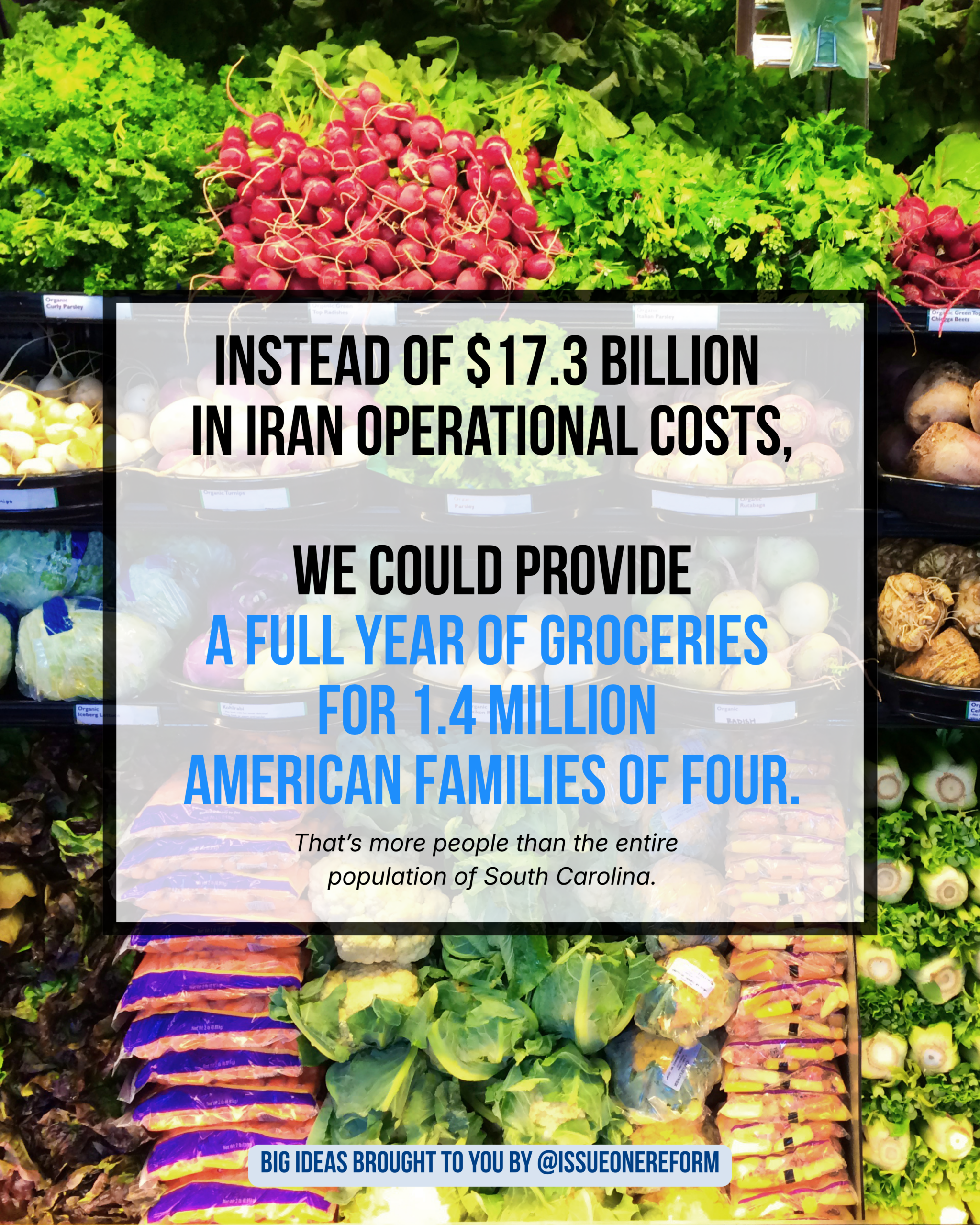
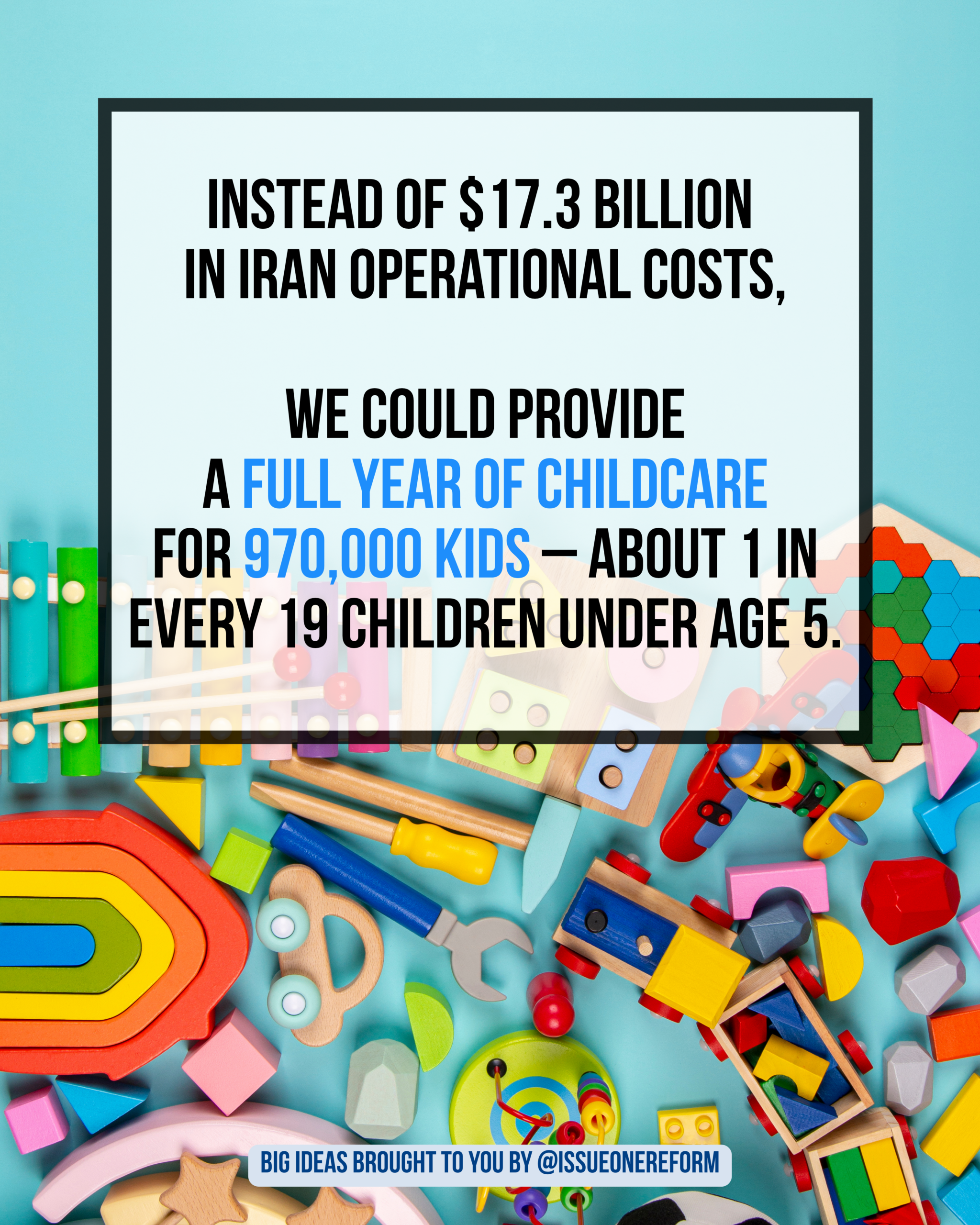
Instead of $17.3 billion in requested operational costs, we could have:

  •  a full year of groceries for 1.4 million American families of four – that’s more people fed than live in the entire state of South Carolina.$235/week of groceries × 52 weeks ≈ $12,220/year; $17.3B ÷ $12,220 ≈ 1.4 million families. 

  • a full year of childcare for nearly 970,000 kids – about 1 in every 19 children under age 5.$17.3B ÷ $68.60/day of childcare ≈ 252 million childcare-days ÷ 260 workdays ≈ 970,000 kids.

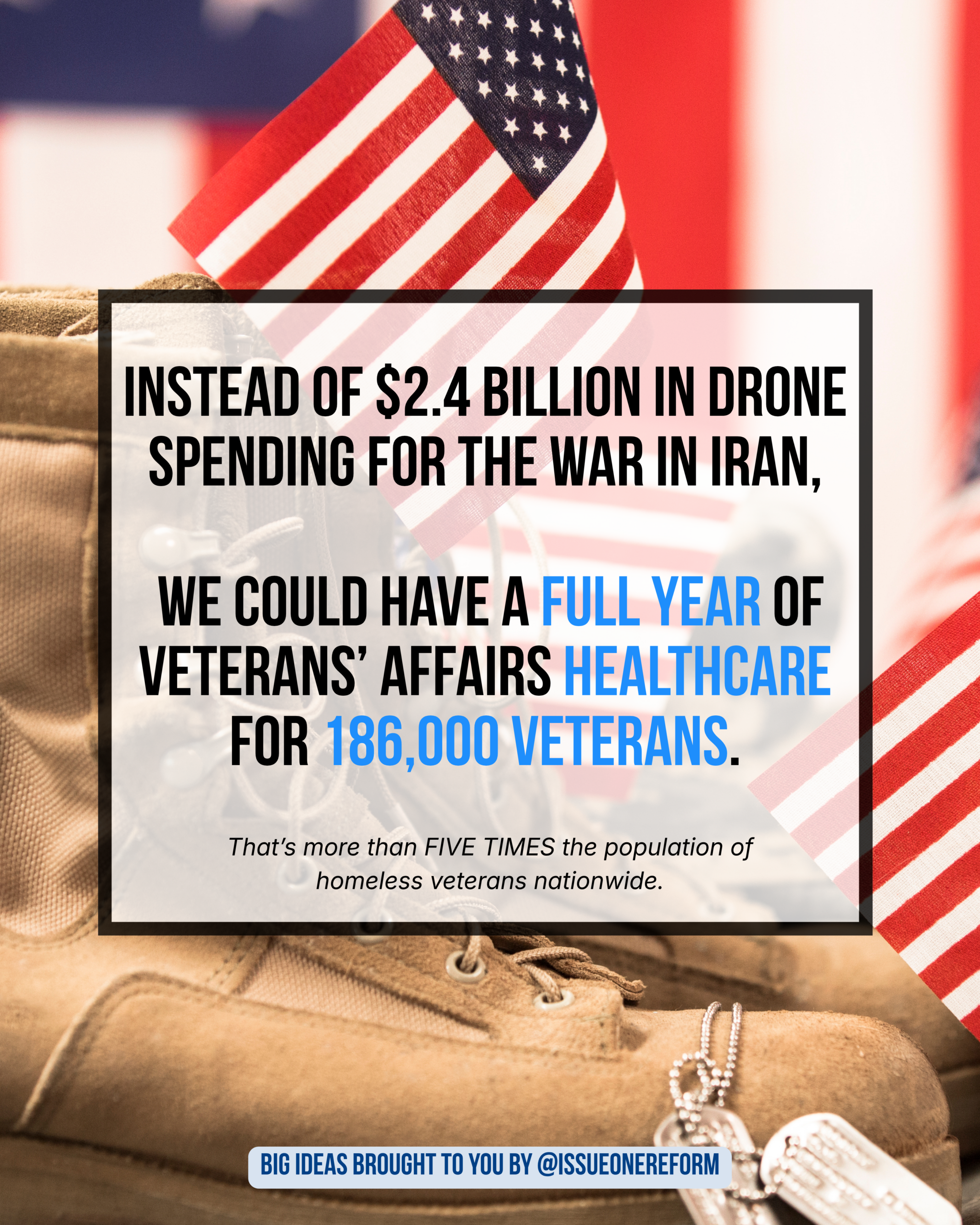
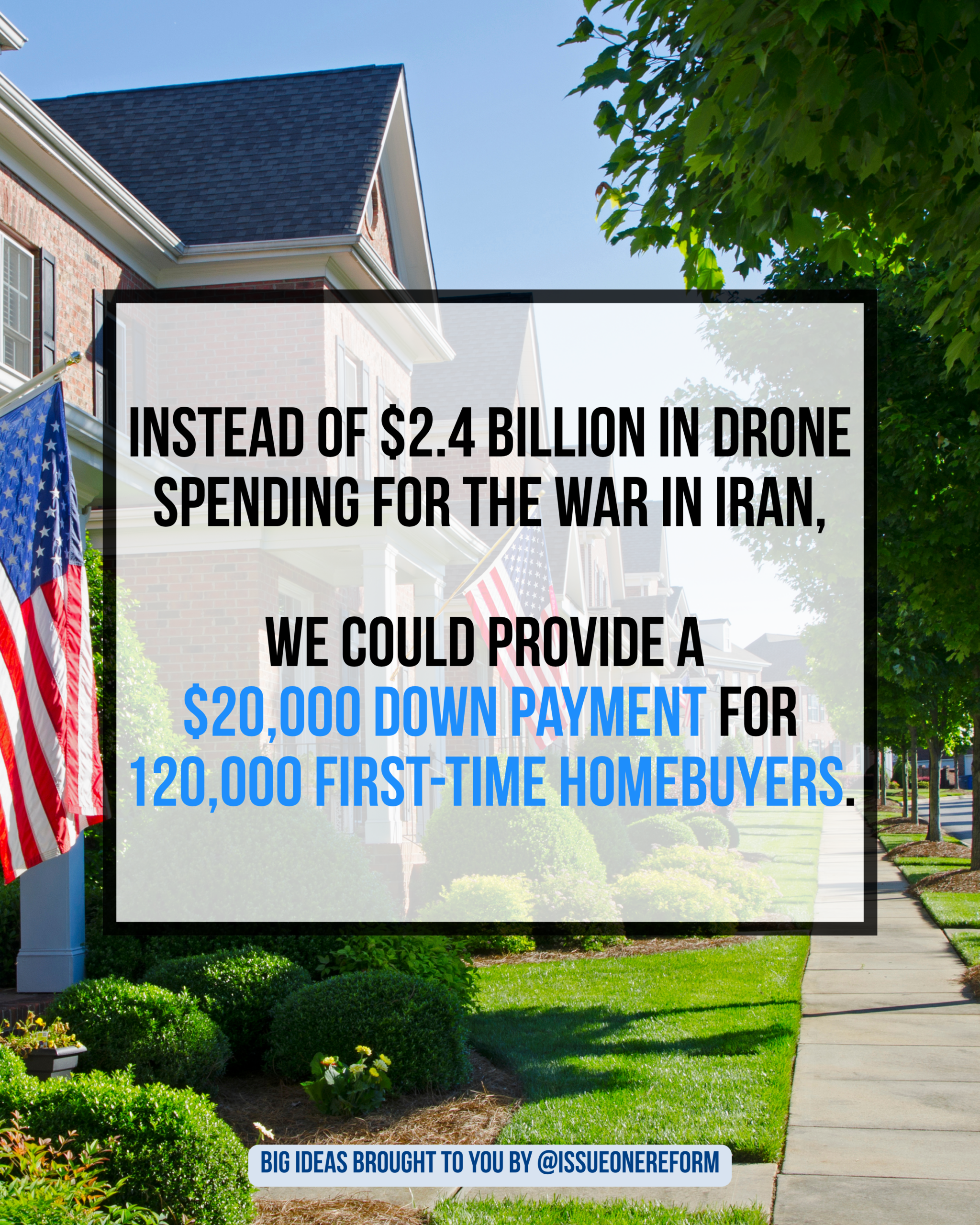
Instead of $2.4 billion in requested drone spending, we could have:

  • a full year of Veterans’ Affairs healthcare for 186,000 veterans – that’s more than 5x the population of homeless veterans nationwide.$12,889 average annual VA health care cost per enrolled veteran; $2.4B ÷ $12,889 ≈ 186,000 veterans.

  •  a $20,000 down payment for 120,000 first-time homebuyers.$2.4B ÷ $20,000 down payment = 120,000 buyers.


The Receipt Trump Won’t Show You

Even the Pentagon’s own numbers don’t add up to a full accounting. Munitions ($21B), operational costs ($17.3B), classified programs ($12.1B), drones ($2.4B), and fuel ($1.5B) total about $54.3 billion — leaving roughly $13 billion of the Iran request completely undisclosed.

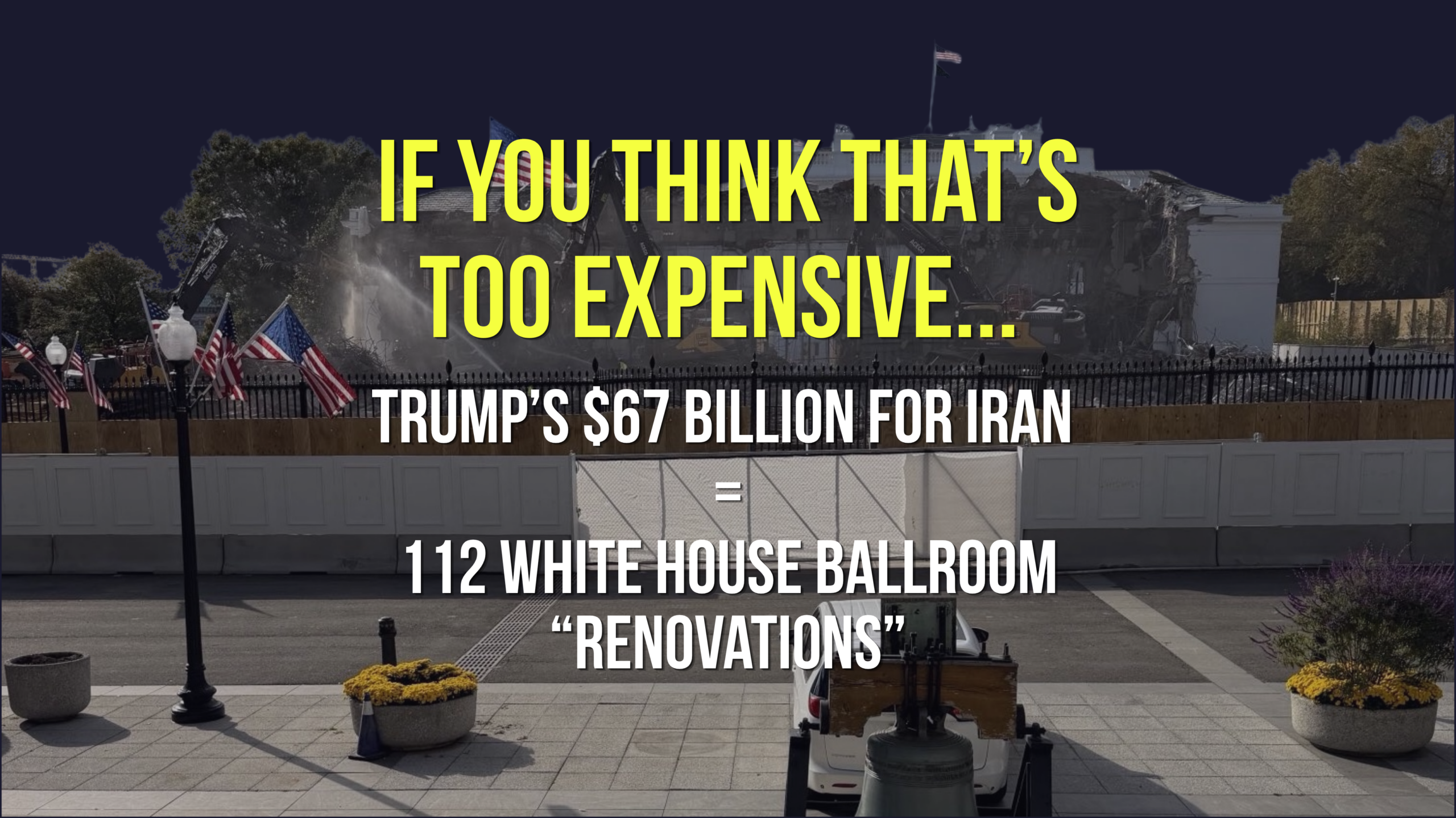
For illustration: $67 billion is enough to build 112 White House ballrooms, or fund 4,094 reflecting-pool renovations like the one his administration recently approved.

What We’re Asking Congress to Do

Authorization is only the beginning. Congress has independent constitutional obligations to appropriate and oversee — whether or not hostilities have already occurred. Ask members to treat the supplemental budget request as an Article I oversight vote, not a referendum on the war itself, and to condition any funding on:

  • Transparency — regular reporting on expenditures, operational objectives, and mission status.
  • Accountability — detailed spending plans before funds are obligated (especially for the categories the Pentagon has only broadly described), mission reports tied to objectives, and sunset provisions forcing Congress to revisit the funding.
  • Fiscal controls — restrictions on transferring or reprogramming funds, plus certification requirements before certain funds become available.