

Reports
Laboratories of Capture: How the Tech Lobby Shapes State Data Privacy Laws
Included below is an executive summary of Laboratories of Capture: How the Tech Lobby Shapes State Data Privacy Laws. To read the full report, click the link below.
Reports
The failures of Facebook, Google, and Twitter’s political ad transparency policies


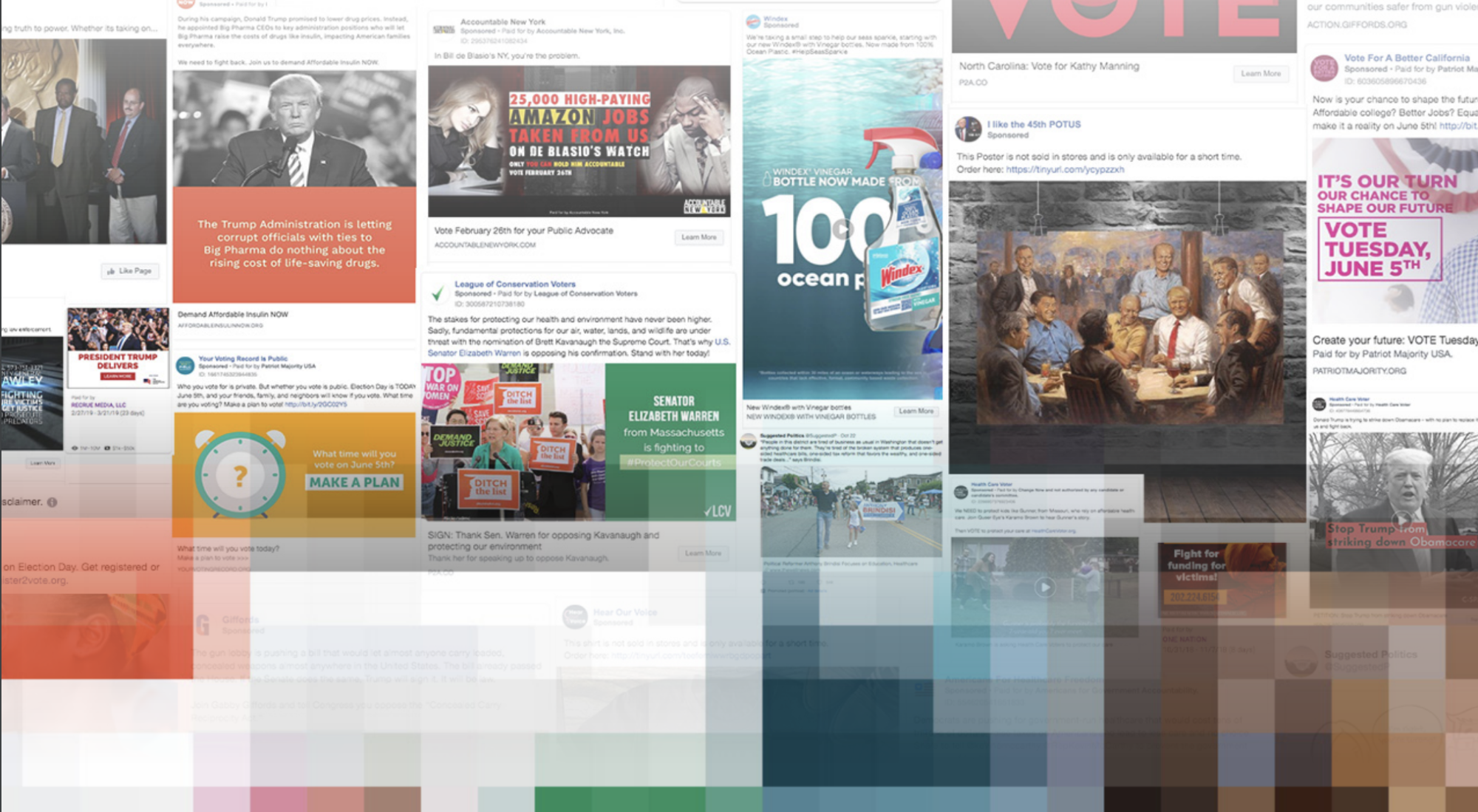
Issue One’s latest report, “Digital Disaster: The failures of Facebook, Google, and Twitter’s political ad transparency policies,” reveals how piecemeal, voluntary approaches by the largest social media platforms to stop disinformation campaigns fail to protect our political system from foreign interference.
As the report shows clearly, the companies’ political ad transparency policies are a mess, and they do not measure up to the existing standards governing political ads on broadcast television and radio or the guidelines set by the bipartisan Honest Ads Act. The databases of political ads that they’ve created to help the public monitor digital ad spending in U.S. elections are also deeply flawed.
“We need to stop foreign disinformation campaigns on the largest social media platforms. The best way to begin doing that is for Congress to pass the bipartisan Honest Ads Act and ensure information about paid, online political ads and their sponsors are uniform, reliable, and accessible,” said Issue One CEO Nick Penniman.
Issue One’s report provides new details and examples highlighting the failures of the political advertising policies of Facebook, Google, and Twitter at a time when they are increasingly coming under scrutiny. Just last week, Twitter CEO Jack Dorsey announced the company would stop “all political advertising” later this month, and hundreds of Facebook employees signed a public letter to Facebook CEO Mark Zuckerberg criticizing the site’s advertising policies after he testified before Congress on October 23.
In our analysis, we found that each technology company defines and enforces political ad “transparency” differently. Rules also vary about who can buy political ads, how ad sponsors are identified, and how ads are categorized as “political.” (A “Case Studies” section of the report provides more details and specific examples.)
Among the report’s specific findings:
These problems, and others, make a compelling case for uniform standards and policies set by Washington, such as the bipartisan, bicameral Honest Ads Act, which was drafted in direct response to the foreign interference in the 2016 election.
Without a new law, these companies’ voluntary political ad transparency policies and online ad libraries are the only way to catch foreign interference, but they will only exist as long as the companies desire, and they could change without notice at any time. It’s unclear what will become of Twitter’s online ad library when the company bans political ads.
Members of Congress are not the only ones in Washington who could bring more transparency to online ads and help prevent foreign interference in our elections. The Federal Election Commission could also take official action, but it is unlikely to do so any time soon, as it has been effectively shut down since the beginning of September and there’s zero political will to change that.
Given the inadequacies and inconsistencies of these political ad libraries, Issue One has also produced a tip sheet for reporters and the public to better understand the data contained in these databases.
Read the full report and download the digital advertising primer & reporter tip sheet.

Reports
Included below is an executive summary of Laboratories of Capture: How the Tech Lobby Shapes State Data Privacy Laws. To read the full report, click the link below.

Reports
Understanding and mitigating election official turnover to build election workforce resiliency...
Introduction In the five years since the monumental 2020 presidential election cast an intense spotlight on election administration processes, the public servants from across the ideological spectrum who run our…

Reports
How the Politicization of Cyber Is Crippling U.S. National Security...
Executive Summary For decades, presidents and Congress treated cybersecurity as a bipartisan imperative. Republican and Democratic administrations alike recognized that defending America’s digital infrastructure is as essential as safeguarding our…